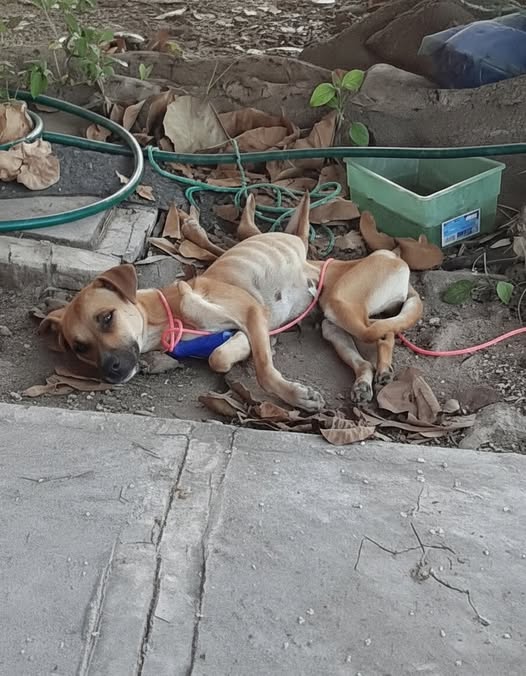
The image was a stark and heartbreaking portrait of neglect: a thin, brown dog, her body contorted and still on the dusty ground, a bright pink rope the only vibrant thing in the frame. This was how Sarah, a local animal rescuer, first saw Eva. Abandoned on the outskirts of town, Eva was not just tied up; she was paralyzed, unable to move her back legs, her eyes reflecting a profound resignation. The pink rope, meant for a playful walk, had become a cruel tether to a hopeless fate. Sarah, with a heavy heart, gently untied her and rushed her to the nearest veterinary clinic
The initial prognosis was grim. The vet, Dr. Anya, explained that Eva had likely suffered a severe spinal injury, possibly from a hit-and-run or deliberate abuse. The damage appeared permanent, and the recommendation was to consider humane euthanasia to end her suffering. Sarah, holding Eva’s paw, felt a wave of despair. Just as she was about to nod in agreement, a tiny, almost imperceptible twitch rippled through Eva’s tail. Dr. Anya’s eyes widened. It was a flicker of life in a sea of stillness, a defiance of the odds. That single, involuntary movement was the first twist in Eva’s story, a silent plea that changed everything.
The decision was made: Eva would fight. The road ahead was long and uncertain. Sarah, with the help of a dedicated team of volunteers, began a grueling regimen of physical therapy. It was a slow, often frustrating process. There were days when Eva seemed to regress, her spirit flagging under the weight of her disability. But then, there were moments of pure magic, like the first time she stood on her own for a few seconds, her front legs trembling with effort.
The second twist in Eva’s journey came in the form of a community rally. As Sarah shared Eva’s story on social media, it resonated with hundreds of people. Donations poured in, not just for her basic care but for specialized treatments that were previously out of reach. This surge of support allowed Eva to begin hydrotherapy, a game-changer in her recovery.