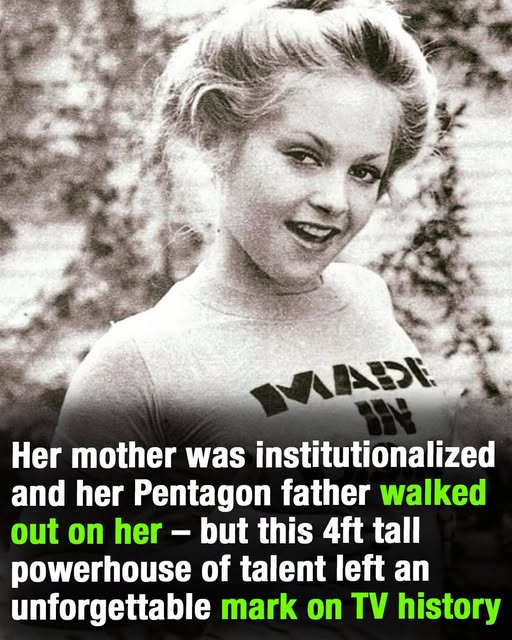
At the height of her fame on “Dallas,” Charlene Tilton appeared to have everything.
She was earning an enormous salary, appearing on hundreds of magazine covers, and starring in one of the most-watched television weddings of its era.
Millions knew her as Lucy Ewing, the spirited and unpredictable young woman at the center of the powerful Ewing family.
From the outside, Charlene’s life looked glamorous.
Behind the scenes, however, she was carrying wounds that had begun long before Hollywood knew her name.
Her childhood was marked by abandonment, foster care, instability, and the painful experience of growing up with a mother who struggled with serious mental illness.
Later came broken relationships, financial hardship, career setbacks, and devastating grief.
But Charlene refused to let any of those experiences define the rest of her life.
## Lucy Ewing Made Her a Television Star
“Dallas” was more than a popular drama.
It became a cultural phenomenon.
The series followed the wealthy Ewing family and their constant battles over money, power, loyalty, and betrayal.
Every week brought new secrets, scandals, and confrontations.
Charlene’s character, Lucy Ewing, brought a different kind of energy to the show.
Lucy was fiery, emotional, mischievous, and often unpredictable.
She did not appear in every scene, but when she did, viewers paid attention.
Charlene gave the character a combination of vulnerability and confidence that made her unforgettable.
Lucy was not simply J.R. Ewing’s niece.
She became a fan favorite in her own right.
Her 1981 television wedding attracted an estimated 65 million viewers, turning Charlene into one of the most recognizable actresses on television.
Yet her path to that moment had been anything but easy.
## Her Father Wanted No Relationship With Her
Charlene was born on December 1, 1958, in San Diego, California.
Her mother, Katherine, worked as a secretary but struggled with severe mental health problems.
Charlene’s biological father, a U.S. Air Force pilot who reportedly worked at the Pentagon, was absent throughout her life.
She later said he wanted nothing to do with her.
Charlene believed he must have known about her success because “Dallas” became such an enormous international hit.
Still, he never contacted her.
That rejection left a painful absence during her childhood.
She grew up knowing that one of her parents had chosen not to be part of her life.
## She Was Placed in Foster Care at Five
When Charlene was only 5 years old, she entered foster care.
She moved between different homes and relatives, never knowing where she would stay or whether she was truly wanted.
One memory remained especially painful.
She overheard children in one home asking when she would leave.
The parents replied that they were trying to send her somewhere else but could not find anyone willing to take her.
For a child, those words carried a devastating message.
Charlene decided that she would never depend on anyone else to support or protect her.
That promise became part of the fierce independence she carried into adulthood.
## She Saw Her Mother Restrained in a Hospital
At age 6, Charlene witnessed a scene no child should have to see.
Her mother had been placed in a psychiatric hospital and was restrained in a straitjacket.
The image stayed with Charlene for years.
While other children might have looked to their parents for safety, Charlene lived with the constant fear that the person responsible for caring for her could not care for herself.
She found escape in movies.
Films including “Mary Poppins” and “The Sound of Music” introduced her to worlds where music, imagination, and courage could overcome hardship.
They also gave her a dream.
She wanted to become an actress.
Her faith became another source of strength.
When her family life felt unstable, she relied on her spiritual beliefs to create a sense of hope and direction.
## Returning Home Did Not End the Chaos
When Charlene was almost 8, her mother was released from the institution.
They returned to California and began living together again.
But home life remained deeply unstable.
Her mother continued taking medication, and the apartment was often cluttered and unclean.
Charlene recalled that her mother sometimes urinated in plastic containers instead of using the bathroom.
The behavior continued for years.
Charlene felt too embarrassed to invite friends home.
She learned to separate her public life from what happened behind the apartment door.
At school, she tried to appear like everyone else.
Inside, she was carrying shame, fear, and responsibility far beyond her age.
## One School Dance Left Her Humiliated
Charlene’s mother once attended a school dance as a chaperone.
During the event, she reportedly began arguing aloud with herself and carrying on a full conversation with no one else.
Charlene said she wanted to disappear from embarrassment.
For a teenager already struggling to fit in, the experience felt unbearable.
But she did not allow the humiliation to destroy her focus.
She turned even more strongly toward acting.
At Hollywood High School, she threw herself into drama classes.
She later said becoming an actress was the only future she could imagine.
Her goal was not just fame.
It was escape.
## She Began Living Alone at 15
Charlene became independent at an age when most teenagers still relied completely on their parents.
By 15, she was reportedly living alone in an apartment.
She began taking small acting jobs and building experience.
Early roles included appearances on “Happy Days” and “Eight Is Enough.”
In 1976, she appeared in Disney’s “Freaky Friday” alongside Jodie Foster.
The parts were modest, but they showed that her determination was beginning to pay off.
Then came the opportunity that changed her life.
## Producers Initially Rejected Her for “Dallas”
In 1978, Charlene auditioned for the role of Lucy Ewing.
The producers initially believed she was too young and inexperienced.
She was not willing to accept that decision.
According to the story, Charlene found ways to remain close to the production and repeatedly appeared on set for nearly two weeks.
She wanted the producers to see her determination.
Eventually, they did.
Her persistence earned her the role.
For someone who had spent childhood feeling unwanted, being chosen for “Dallas” represented more than a career breakthrough.
It proved that refusing to disappear could change her life.
## Fame Arrived Almost Overnight
“Dallas” became a massive success, and Charlene’s life changed quickly.
She appeared on more than 500 magazine covers.
At the height of the show, she reportedly earned $50,000 per episode.
Her television wedding became one of the most-watched events in the show’s history.
She appeared on talk shows, game shows, and entertainment specials.
She recorded music, helped finance a short film, and hosted major events including the Macy’s Thanksgiving Day Parade and Dick Clark’s New Year’s Eve celebration.
She also accepted guest roles on programs such as “The Love Boat,” “Fantasy Island,” and “Circus of the Stars.”
She had achieved the dream she formed as a frightened child watching movies.
But success brought a different kind of pressure.
## Her Private Life Became Public Property
Charlene married country singer Johnny Lee in 1982.
The marriage lasted only two years.
As their relationship deteriorated, the problems became tabloid material.
Charlene had very little privacy.
She received obscene phone calls.
Strangers sometimes reached out and touched or grabbed her blonde hair.
When she went to restaurants with her young daughter, people stared, whispered, and pointed.
Fame created attention, but it did not always create safety.
Her personal difficulties continued to grow.
Eventually, financial problems contributed to the foreclosure of her home.
The public still saw a television star.
Charlene was struggling to hold her life together.
## Her Career Hit a Painful Low
By the middle of the 1980s, Charlene’s career had slowed.
She hosted an episode of “Saturday Night Live,” but the episode was poorly received and became one of the lower-rated points of that season.
Then, in 1985, “Dallas” removed her from the series.
The decision devastated fans.
Thousands of letters reportedly arrived asking producers to bring Lucy Ewing back.
Charlene later said Larry Hagman, who played J.R. Ewing, was disappointed by her departure.
He contacted her and praised her acting ability.
She believed Hagman supported efforts to return her to the show.
In 1988, she came back.
She remained for two more seasons before leaving again in 1990, one year before the original series ended.
## She Stayed Close to Larry Hagman
Charlene maintained a strong friendship with Larry Hagman after leaving “Dallas.”
She worried about him as his health declined.
In 1995, Hagman was diagnosed with liver cancer and needed a transplant.
He received the transplant and survived for many more years.
Charlene did not appear in the “Dallas” reunion films, but she took part in “Dallas Reunion: The Return to Southfork” in 2004.
The event allowed her to reconnect publicly with the television family that had shaped so much of her life.
Although “Dallas” had created both opportunity and pain, Charlene continued to speak warmly about many of her castmates.
## Her Fiancé Died Suddenly at 54
One of Charlene’s most devastating losses came in 2009.
Her fiancé, cinematographer Cheddy Hart, died suddenly of heart failure at age 54.
His death shattered her.
Charlene later admitted that she responded by sitting on the couch, drinking alcohol, and smoking cigarettes.
For someone who had survived abandonment, instability, and career disappointment, this loss felt different.
She had found companionship and love.
Then it disappeared without warning.
For a time, grief stopped her life.
## She Found Purpose Through Autism Advocacy
Charlene eventually made a decision not to remain trapped in her pain.
She redirected her energy toward helping others.
She became involved in autism awareness and began teaching acting to children and adults on the autism spectrum.
The work gave her a new purpose.
Acting had once rescued her from her own difficult childhood.
Now she could use the same art form to help people build confidence, communicate, and express themselves.
The classroom became a place of healing for Charlene as well as her students.
She was no longer chasing the same kind of fame she had experienced on “Dallas.”
She was creating something quieter and more meaningful.
## She Built a New Life in Nashville
Charlene eventually settled in Nashville, Tennessee.
Her life became calmer and more private.
She remained close to her daughter, Cherish, and her two grandsons.
She proudly called herself “Glamma.”
After a childhood without stability, becoming a loving and present grandmother carried deep meaning.
She could give her grandsons the safety and affection she had desperately needed as a child.
Her life was no longer defined by ratings, magazine covers, or television contracts.
It was built around family.
## A DNA Test Revealed Three Half-Siblings
Later in life, Charlene took a DNA test and discovered that she had three half-siblings.
They shared the same biological father.
Like Charlene, they had never developed a relationship with him.
The siblings eventually located information about their father, only to learn that he had died six months earlier at age 93.
Charlene never received the answers or acknowledgment she had once wanted.
Still, she chose not to live with bitterness.
She said she did not carry a chip on her shoulder and refused to fall into self-pity.
Instead, she focused on finding the positive side of difficult experiences.
That outlook, she said, had helped her survive the most turbulent periods of her life.
## She Refused to Be Defined by What Happened to Her
Charlene’s story is not simply about a child who became a television star.
It is about what happened after the dream came true.
Fame did not erase her childhood wounds.
Money did not protect her from divorce, grief, or loss.
Success did not guarantee that she would always feel secure.
But she kept rebuilding.
She survived foster care.
She lived through the instability of her mother’s illness.
She created a career despite being told she lacked experience.
She endured public rejection when “Dallas” dismissed her.
She faced financial hardship and the sudden death of the man she loved.
Every time life knocked her down, she eventually found a reason to stand again.
## Her Greatest Success Came After the Spotlight
Today, Charlene’s life looks very different from the years when Lucy Ewing’s wedding drew tens of millions of viewers.
She is no longer surrounded by constant cameras and tabloid attention.
She is a mother, grandmother, teacher, advocate, and survivor.
Her peace did not arrive easily.
She built it slowly from the pieces of a life that had repeatedly been broken.
The child who once overheard adults saying no one wanted to take her in grew into a woman surrounded by family.
The teenager who dreamed only of escaping became an actress known around the world.
And the star who once lost her home and career later discovered that purpose did not depend on fame.
Charlene Tilton’s most powerful role may not have been Lucy Ewing.
It may have been the woman she became after the cameras stopped rolling.
She did not deny the trauma.
She did not allow it to control the ending.
Instead, she transformed abandonment into independence, grief into service, and survival into a life filled with meaning.