
I came home early expecting rest, but instead found my house filled with a silence that felt staged, as if something terrible had already happened and was waiting for witnesses.
The lights were off, my suitcase still by the door, when a faint dragging sound pulled me toward the kitchen like a warning I could not ignore.
On the floor was my nine-year-old daughter, kneeling, sweating, and scrubbing as if cleanliness were a test she had already failed once.
Her small body moved mechanically, driven by fear rather than instruction, and when I saw her hands, my understanding of family loyalty collapsed instantly.
Her palms were raw and cracked, the skin split open in thin red lines, evidence of punishment disguised as discipline.
She did not cry when she saw me, which frightened me more than tears ever could.
Children cry when they expect comfort, but silence means they expect consequences.
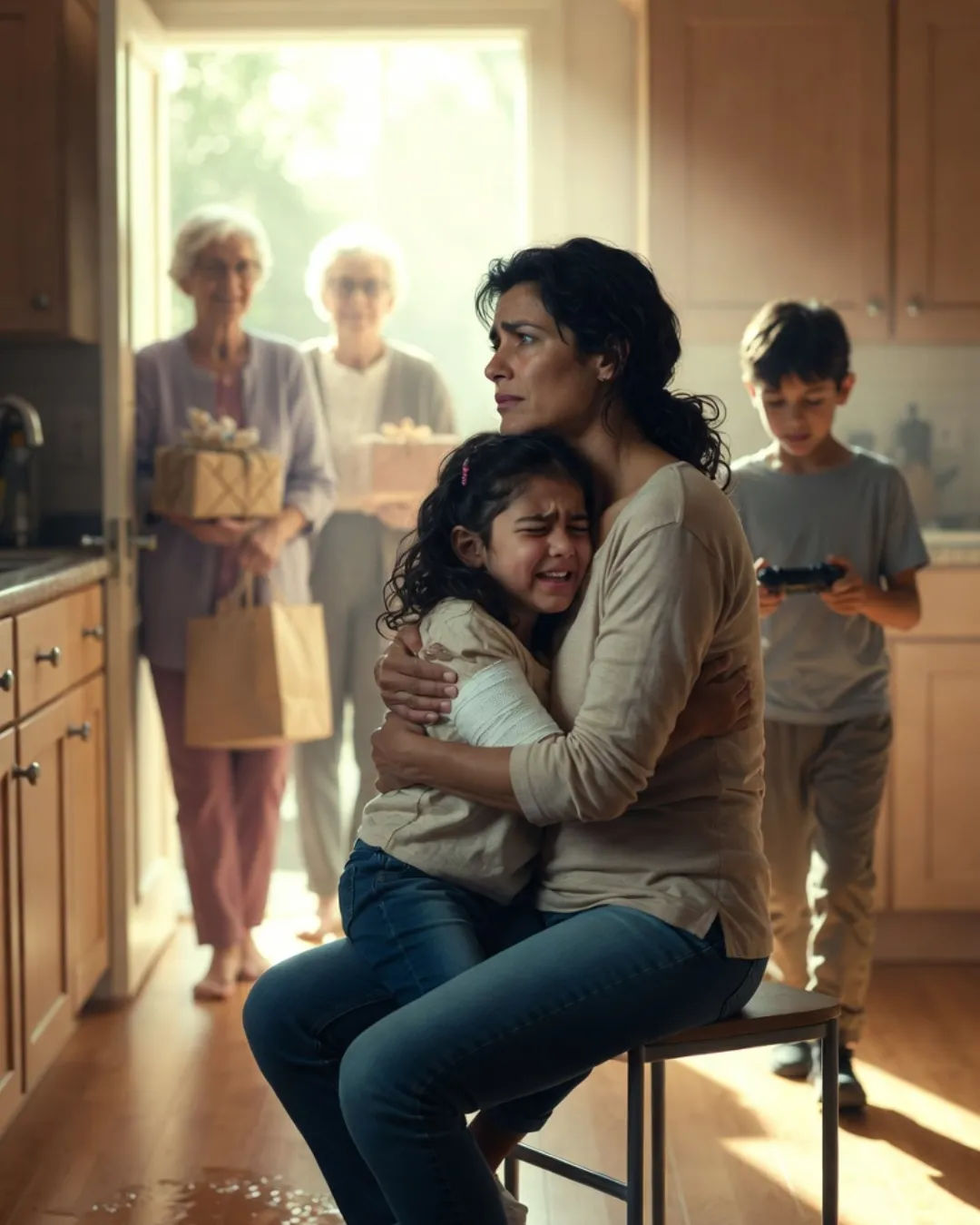
She whispered that she had to finish, because anger was waiting for her if she did not.
That was the moment I understood that cruelty does not always arrive screaming, but often dressed as calm authority and moral correction.
My in-laws believed they were teaching her gratitude, obedience, and respect, words often used to justify harm when empathy becomes inconvenient.
They had taken their “real grandchild,” my sister-in-law’s son, to an amusement park, while leaving my daughter behind to “learn.”
The lesson was clear, even if never spoken aloud: some children belong, and others must earn their place through suffering.
I did not scream, not because I felt calm, but because rage would have made this about my emotions instead of my daughter’s safety.
I lifted her, wrapped her hands, and told her she had done nothing wrong, a sentence children should never doubt.
When she looked at me with fear that I might also scold her, I realized how deeply that damage had already reached.
Abuse within families often survives because it hides behind familiarity and the assumption that elders always know best.
Society tells us to respect grandparents, trust family, and avoid conflict, even when children are paying the price for that silence.
I saw twenty-three missed calls from my mother-in-law, each one an attempt to control the narrative before I could see the truth.
And then they walked in laughing, confident, certain that authority would protect them from accountability.
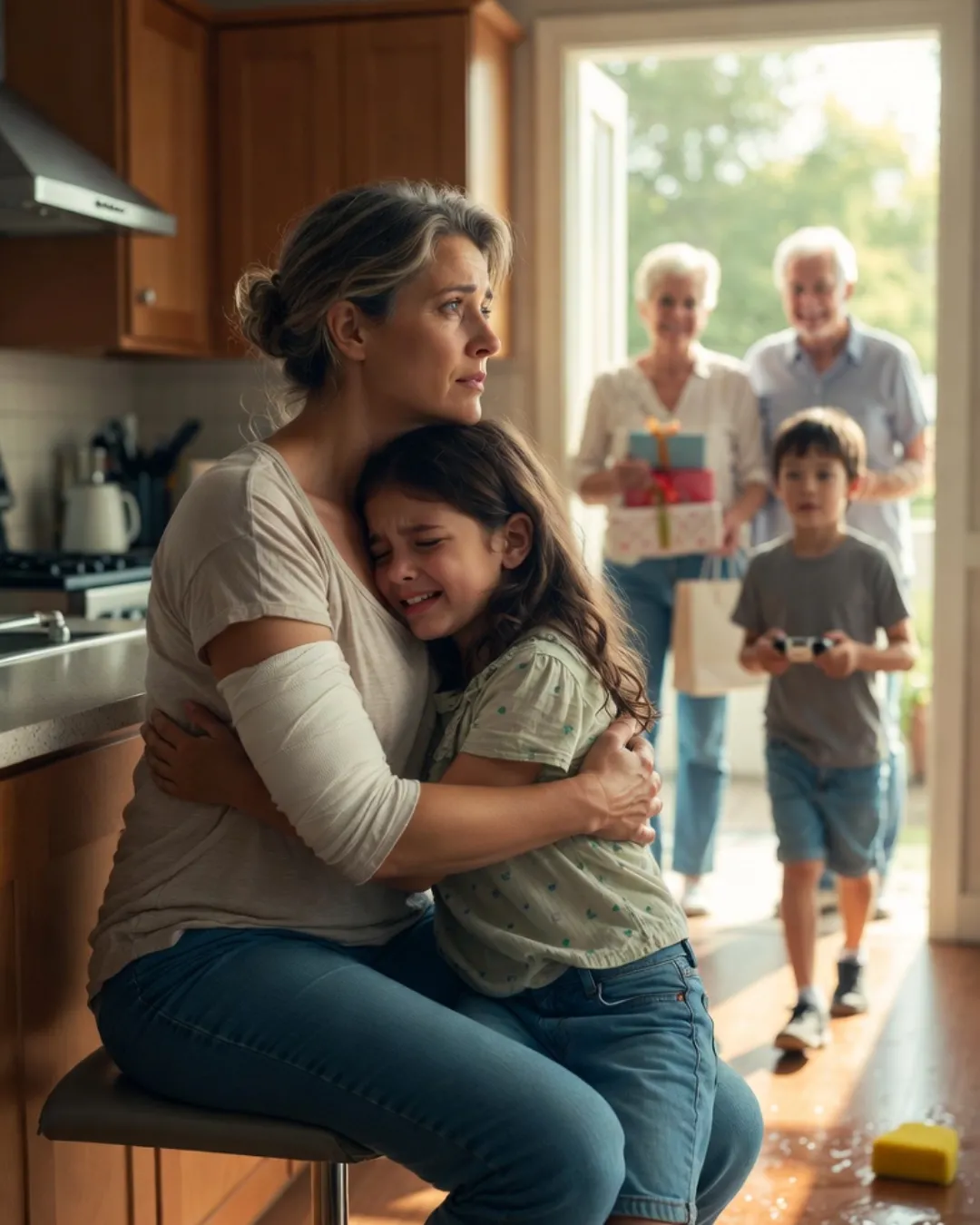
That confidence is what fuels so many stories like mine, stories shared quietly until they explode online and force public reckoning.
When I refused to react the way they expected, confusion replaced their certainty, because calm resistance disrupts abusive power more than shouting ever could.
This is not just a family dispute, it is a mirror reflecting how easily children are harmed under the banner of “proper upbringing.”
People online later asked why I did not confront them immediately, why I did not make a scene or call the police that night.
The truth is that protecting a child sometimes means choosing strategy over spectacle, especially when abusers rely on appearing reasonable.
What followed was not dramatic violence, but something far more unsettling: documentation, boundaries, and consequences that could not be talked away.
The phone calls the next morning were relentless, not out of concern for my daughter, but fear of losing control.
That fear revealed everything words never could.
When this story spread, reactions were divided, because nothing polarizes people faster than challenging family hierarchy.
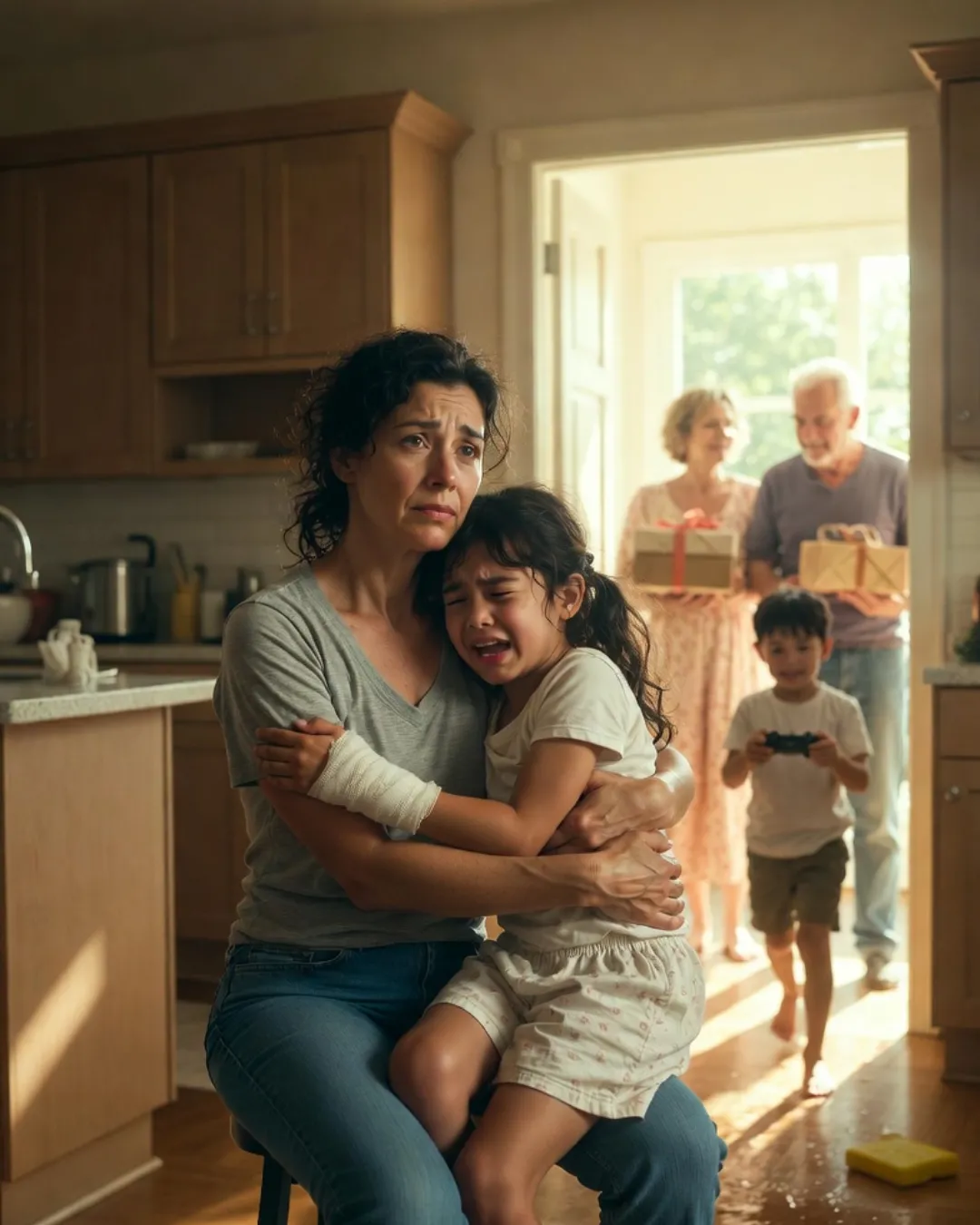
Some accused me of overreacting, insisting that discipline today is too soft and children must learn resilience through discomfort.
Others recognized the pattern immediately, because they had once been the child scrubbing floors while others went out to have fun.
The debate exposed a dangerous belief still deeply rooted in society: that emotional harm does not count if it leaves no permanent scars.
But trauma does not need bruises to take hold, it only needs repetition and power imbalance.
Favoritism, exclusion, and forced punishment teach children exactly what they are worth in the eyes of adults they depend on.
And once learned, that lesson follows them into adulthood, shaping relationships, boundaries, and self-respect.
This is why stories like mine gain traction, not because they are rare, but because they are painfully common.
Social media amplifies them because people recognize themselves in the quiet details, not the dramatic headlines.
A sponge on a floor, a child afraid of anger, grandparents who smile while doing harm, these moments are everywhere.
The outrage comes from recognition, not shock.
What unsettles people most is that I did not forgive quickly, did not minimize, and did not prioritize family peace over my child’s dignity.
Forgiveness without accountability only teaches abusers to be more careful next time.
Real protection requires believing children even when their stories inconvenience adults.
It requires accepting that “family” does not automatically mean “safe.”

This story continues to circulate because it asks an uncomfortable question many would rather avoid.
How many children are being punished right now for daring to ask why they are treated differently.
And how many adults are choosing silence because confrontation feels harder than regret.
I did not come home early to make a statement, but I made one anyway by refusing to look away.
If this story makes you angry, defensive, or reflective, then it is doing exactly what it needs to do.
Because protecting children should never be controversial, even when it forces us to rethink what we were taught about family.
What happened after that night was not a single dramatic confrontation, but a series of quiet decisions that permanently changed our family structure.
Boundaries were set, access was revoked, and explanations were no longer offered as invitations for debate.
People often underestimate how radical it is for a parent to simply say no to elders who believe authority is inherited, not earned.
My in-laws insisted they were helping, that hardship builds character, that children today are too sensitive.
Those phrases sounded familiar because they are repeated in countless households where harm is normalized through tradition.
What they never addressed was why “lessons” were only assigned to one child, while another was rewarded with joy.
Favoritism is not harmless preference, it is a message delivered daily, shaping how children see their worth.
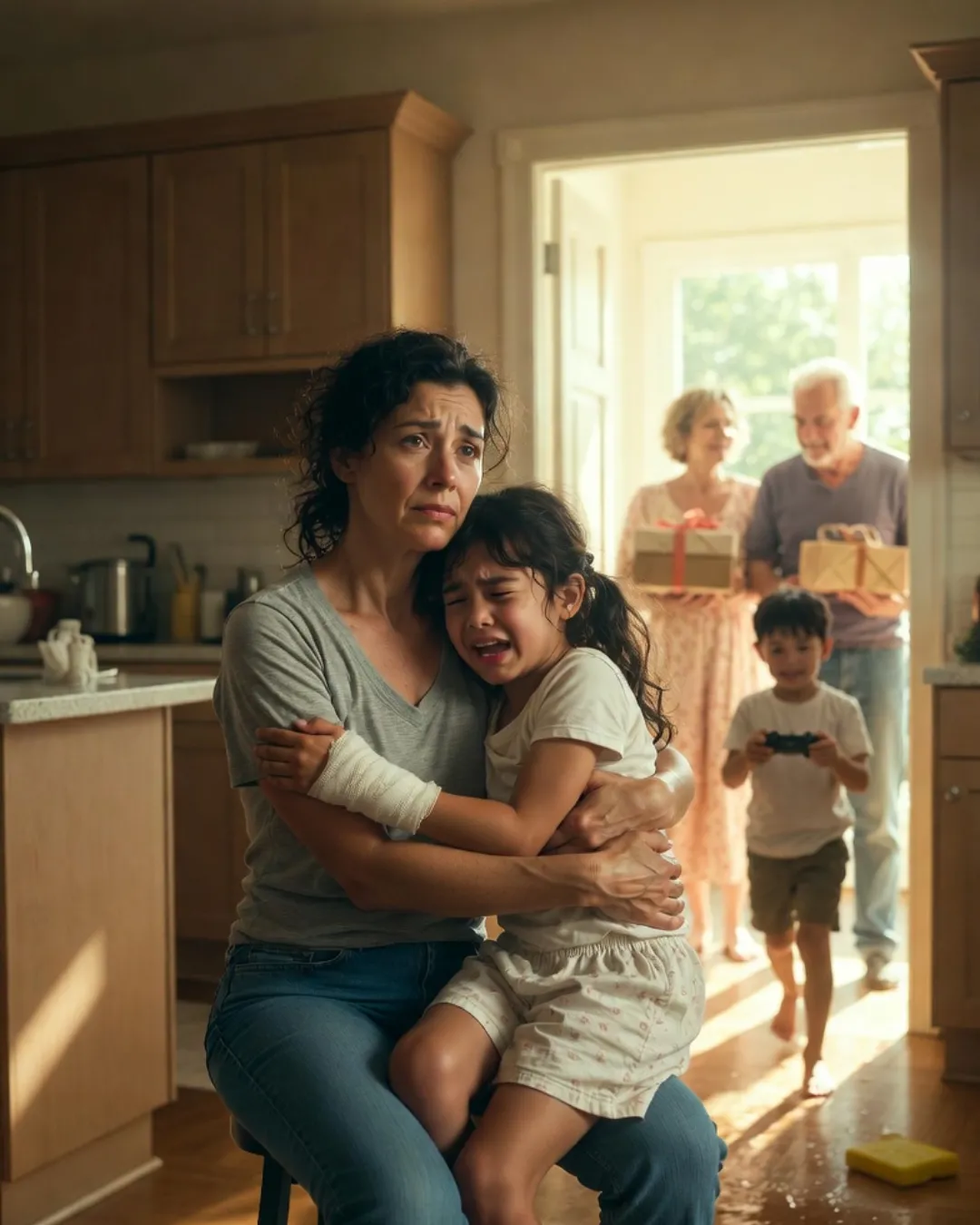
Riley began asking questions weeks later, not about punishment, but about whether she truly belonged in her own family.
No child should ever wonder if love is conditional.
When I shared this story publicly, survivors reached out in waves, describing eerily similar experiences they had never named as abuse before.
They described floors scrubbed, chores assigned with anger, and siblings favored without explanation.
Many said this was the first time they realized what they endured was not discipline, but humiliation.
The backlash was equally loud, accusing me of turning family matters into public spectacle.
But silence has protected cruelty for generations, and exposure is often the only thing that disrupts it.
This story continues to spread because it forces a choice between comfort and conscience.
And every share is not gossip, but a quiet declaration that children deserve safety, dignity, and equal love, even when tradition disagrees.
A blind teenager disappeared without a trace two years ago in the park-giangtran

Two years after Yosemite National Park closed the disappearance file of sixteen-year-old Evan Hart, a blind hiker who vanished on a family trip, the case snapped back to life when his guide dog, Atlas, emerged alone from the wilderness.